
EASTERN AIR LINES HISTORY
Eastern Air Lines’ story begins not with a passenger cabin, but with the roar of airmail engines in the late 1920s. In 1927, aviation pioneer Harold Pitcairn founded Pitcairn Aviation and soon secured the federal airmail route known as CAM-19, flying between New York and Atlanta. What started as a mail operation quickly revealed a bigger vision: connecting the rapidly growing cities of the East and South by air. In 1930, Pitcairn sold the airline to financier Clement Keys, and the company was renamed Eastern Air Transport—soon shortened to Eastern Air Lines. From its headquarters in Atlanta, Eastern expanded aggressively through the Southeast, establishing routes that helped turn the city into a central aviation hub and laying the groundwork for what would become one of America’s most influential airlines.
The airline’s identity solidified under the leadership of Eddie Rickenbacker, the World War I flying ace who became Eastern’s general manager in 1935 and later its president. Rickenbacker steered the company through its most formative decades, emphasizing safety, technical innovation, and operational discipline at a time when commercial aviation was still earning public trust. During World War II, Eastern played a crucial role in military transport and training, further cementing its national importance. During the postwar boom, the airline entered what many consider its golden era—expanding its fleet with aircraft such as the DC-3, Constellation, and DC-7, and later jetliners such as the DC-8 and L-1011 TriStar—and building a reputation for dependable service along the Eastern Seaboard, the Caribbean, and Latin America. For millions of travelers in the mid-20th century, Eastern wasn’t just an airline; it was the airline of the East.
By the 1970s, however, the skies were changing. Deregulation in 1978 reshaped the airline industry, intensifying competition and imposing new financial pressures on legacy carriers designed for an earlier era. Eastern struggled to adapt. Costly labor disputes, rising fuel prices, and mounting debt weakened the company’s footing just as newer airlines gained ground. In the mid-1980s, Eastern was acquired by Texas Air Corporation under the leadership of Frank Lorenzo. This move deepened tensions with employee unions and led to one of the most consequential labor strikes in aviation history. Operations slowed, assets were sold, and the airline that had once defined stability found itself in crisis.
On Jan. 19, 1991, Eastern Air Lines operated its final flight, closing the chapter on more than six decades of service. The shutdown marked more than the loss of a primary carrier—it signaled the end of an era in American aviation, one shaped by pioneers, wartime aviators, and generations of pilots and crews who helped build commercial flight as we know it. Yet Eastern’s legacy did not disappear with its last landing. It endures in the aircraft that once bore its name, in the careers launched from its cockpits, and in the memories of those who flew under its banner. This history is preserved not only as a record of routes and aircraft, but as a testament to the people who transformed a mail line into one of the most storied airlines in the nation’s past.
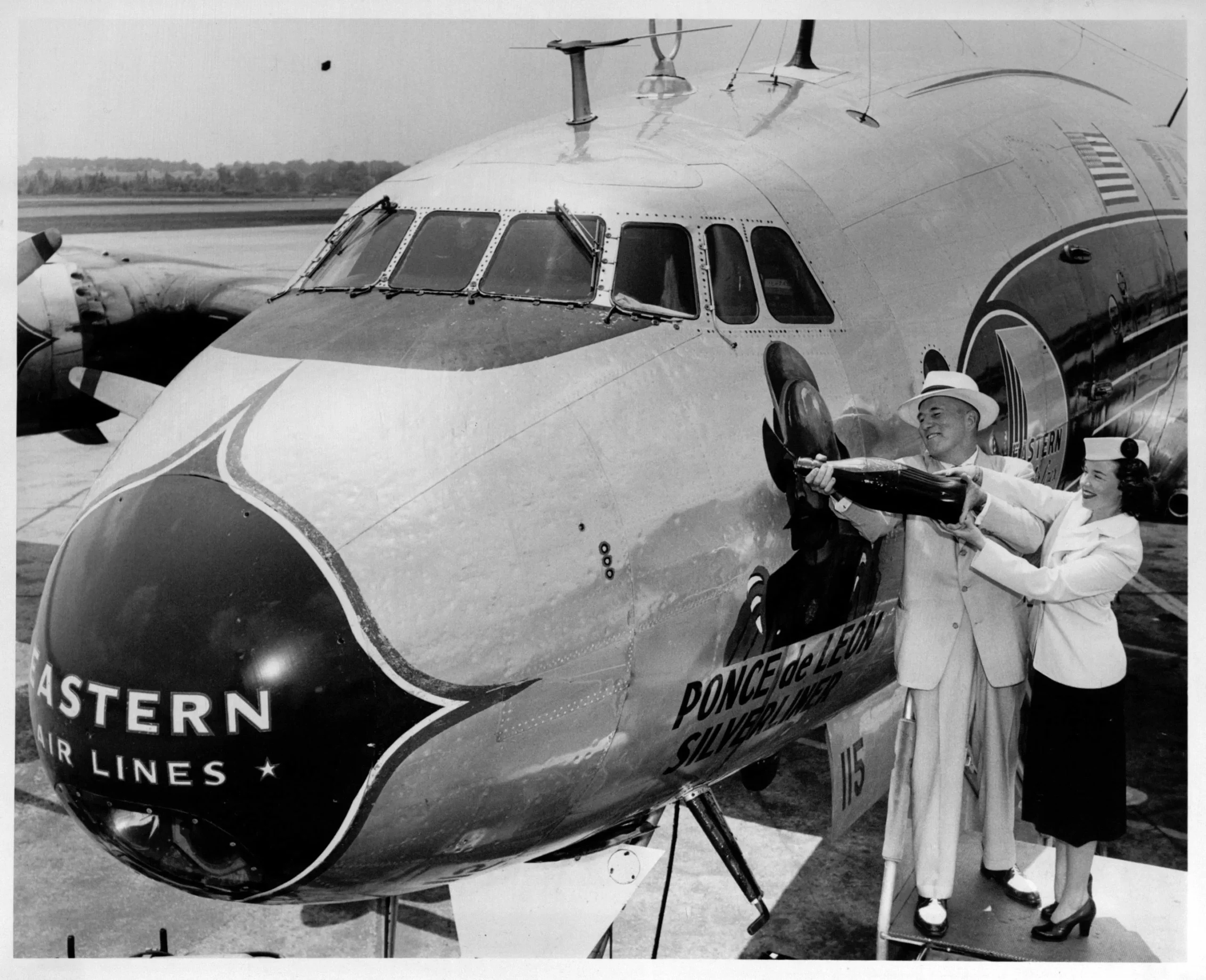
Photo courtesy of Special Collections & Archives, Georgia State University Library. License details.
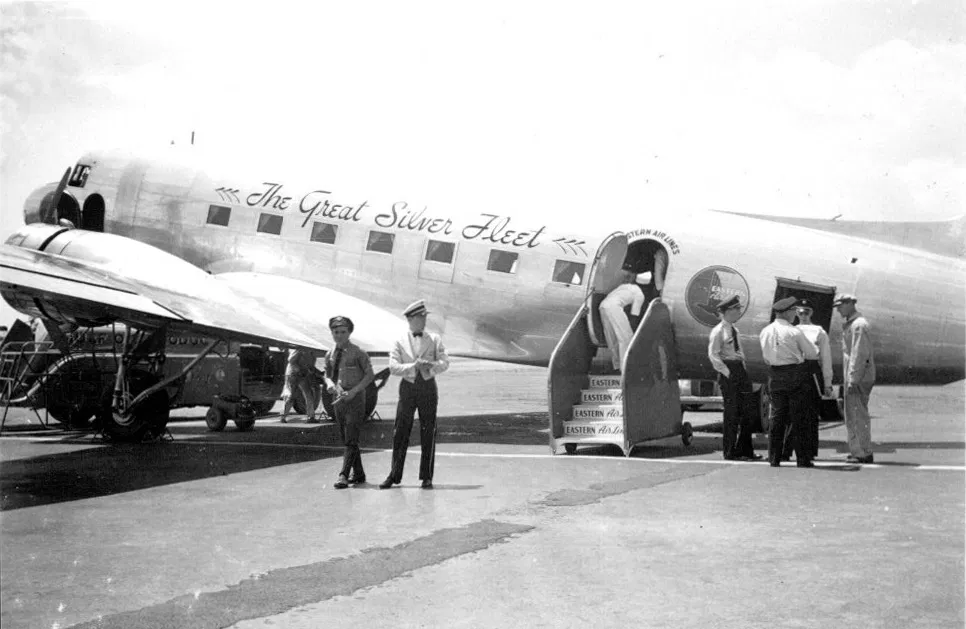
Photo courtesy of Wikimedia.
- Margaret Bartlett
- November 30, 2025